HEAT RECOVERY
Everyday challenges at Marina Bay Sands spark ideas to recover excess heat and cut energy use
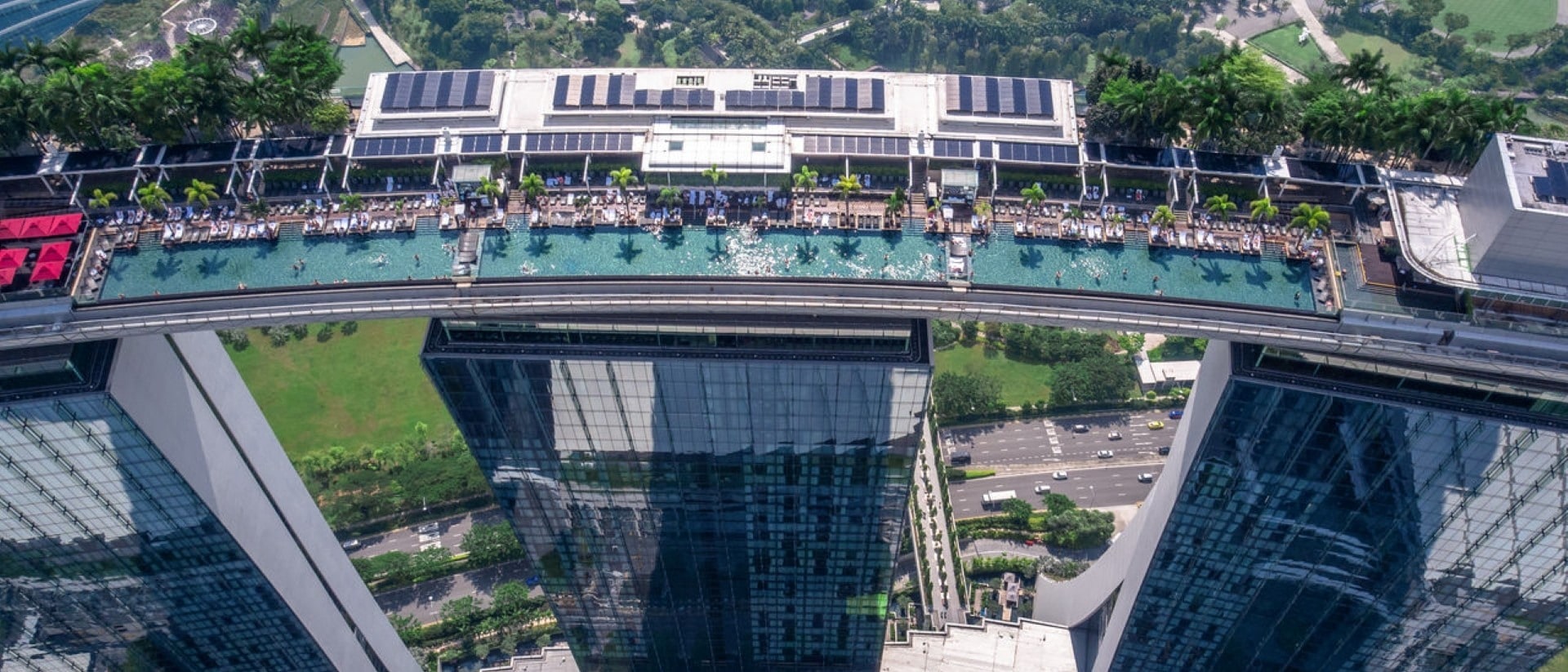
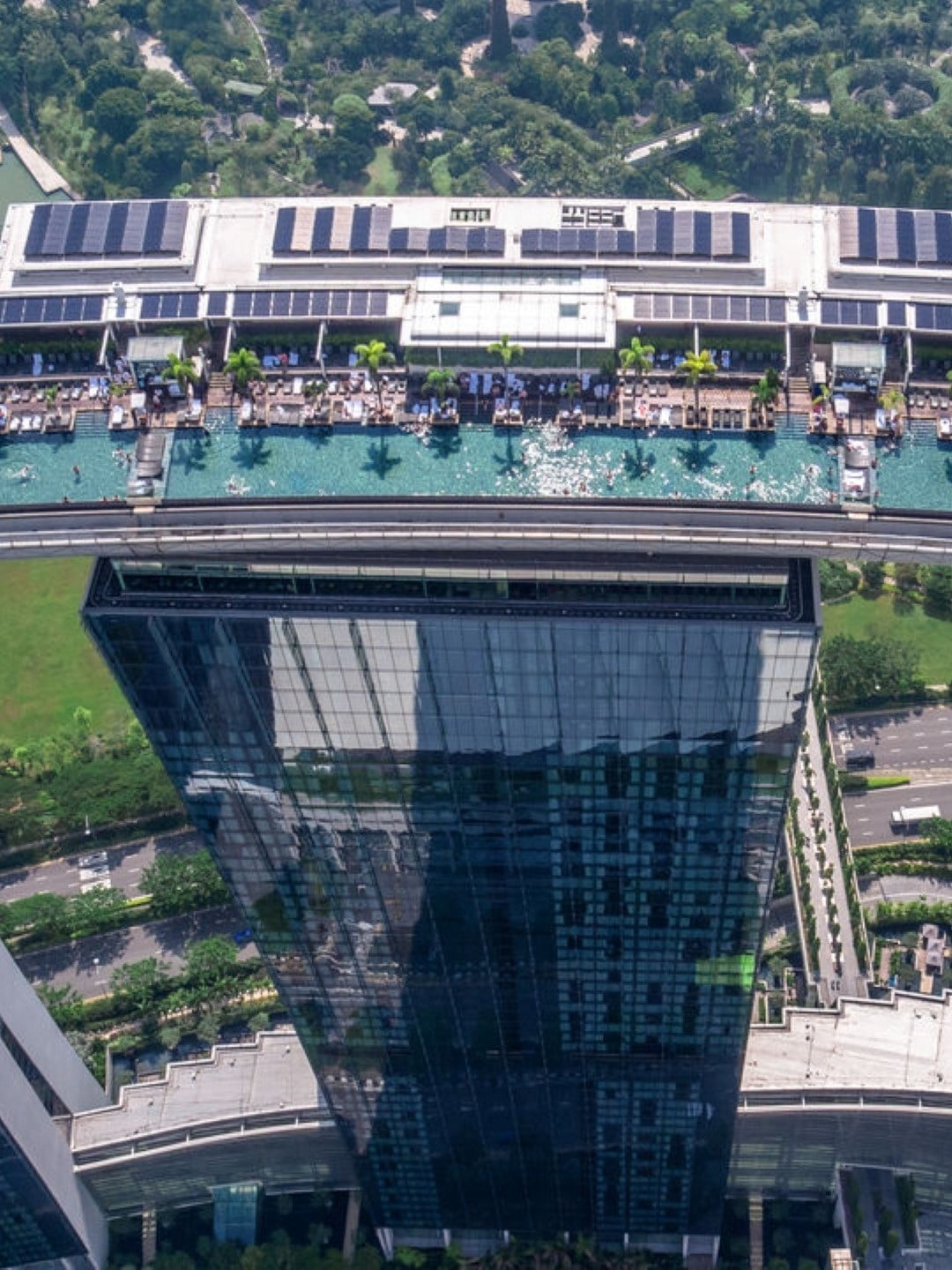
In tropical Singapore, it is hard to imagine feeling so cold that a place has to be warmed up. Yet, that is the surprising case for the iconic swimming pool perched atop Marina Bay Sands.
Water at a chilly 22°C used to greet guests taking an early plunge, thanks to the cool morning air. Since 2024, the integrated resort has warmed things up to a comfortable 27°C by heating up the 1.4 million litres of water in the pool and maintaining this throughout the day.
However, instead of heating it through conventional ways, the water is heated up by drawing hot air from one of the mechanical plant rooms of the integrated resort.
The idea came from teams working together to find ways to improve things at Marina Bay Sands. Conditions at the plant were warm and uncomfortable for workers, whose experience lit a bulb: Why not transfer the heat to the pool?
Hence, a pump now draws the hot air from the mechanical room and automatically sends as much heat as is needed to keep the temperature comfortable at the pool. Not only has this elevated the experience for guests, it has also reduced power usage and improved working conditions.
The seemingly small improvement is just one of many that have been sparked by challenges faced by Marina Bay Sands staff as they go about their day.
Teamwork is crucial to innovation efforts to improve building management and sustainability efforts, says Sridhar Kandhadai, Senior Vice President for Property and Asset Management at the integrated resort.
“Through a cross pollination of ideas among different teams, many breakthroughs have been made over the years,” he adds.
Double heat recovery
Another example is the recovery of excess heat to reduce wastage at ArtScience Museum. An industry first, this involves a complex process that keeps guests comfortable while making smart use of the museum’s heating and cooling systems.
The story begins with the chilled water supplied from the region’s District Cooling System, which arrives at Marina Bay Sands at 6.5°C. After cooling parts of the property, the temperature of the water usually reaches about 14°C.
For ArtScience Museum, where delicate exhibits require moisture levels to be low, temperatures are reduced further to 9°C with an efficient refrigerant. The heat extracted here is then used to create a warmer ambient temperature – sans the humidity – and returned to the museum for the comfort of guests.
Over time, the Marina Bay Sands facilities team developed an innovative method to recover excess heat in two distinct stages, ensuring it is not simply released into the atmosphere. This process is enabled by a refrigerant-to-water heat exchanger.
In the first stage, the recovered heat is used to dehumidify the air—an essential step for maintaining the controlled environment required by the ArtScience Museum’s sensitive exhibits.
In the second stage, during nighttime hours when ambient temperatures are lower and cooling demand is reduced, any remaining excess heat is redirected to a reheating coil. This coil raises the temperature of the chilled water—originally supplied by the District Cooling System—back up to 14°C, the required level for its return to the system.
While other properties reheat this water to reach that temperature, Marina Bay Sands has managed to avoid using more energy here. This saves S$60,000 annually in electricity bill while keeping things more sustainable.
Takes a team to find a solution
In 2012, Marina Bay Sands had already started recovering heat generated from cooling the museum, but this latest step to re-use excess heat a second time was only completed in September 2025.
On average, 35 to 40 per cent of energy use in a building in Singapore is for cooling facilities, so recovering excess heat is crucial to cutting energy use at the integrated resort, says Kandhadai.
This heat recovery system is already helping to avoid penalties that it might incur, if it returned the circulated water to the central district system at too low a temperature, he explains.
Once again, the innovation would not have come about if not for teamwork. Each week, parts of the facilities team meet up to share new ideas for improvement. At one such meeting, the idea for the heat recovery came up.
Says Kandhadai: “One group says they have been paying the penalty for not returning water warm enough for the central district cooling. Then another team says, ’We have a lot of heat here.’ That’s when the cross-pollination happens, where the magic takes place and new ideas are created.”
Culture of Innovation
It is tough to keep everything running smoothly in such a large property, but improvements regularly happen with a culture of innovation, where risk taking is encouraged and there is a willingness to accept failure from experiments, says Kandhadai.
This, he notes, is crucial to constantly improve the guest experience and deliver services that are truly world leading. So often, small details make all the difference.
Near the hotel lobby entrance, hot humid air does not simply gush in whenever a glass door is opened. This is thanks to the use of sensors, pumps and fans in the building to balance the air pressure within the hotel lobby. The result: Cold air is continuously pushed out to resist the external hot air pressure.
“Now, air only gushes out. So, when you stand in the taxi lobby, you'll find cold air coming out from the building, irrespective of the season,” he says.
Indeed, there are many similar innovations sparked by ideas from staff on the facilities team.
On innovation, Kandhadai says that a formal structure for collaboration set up by the company can help to get people working together, but open communications is more important.
He adds, “I have nine people in my team who meet every week. They look at operational issues, guest feedback, and scan across different departments to look for solutions. We need this open-minded and fearless approach, with support from leadership, for true innovation to happen.”