MANAGING SINGAPORE’S LARGEST WARDROBE
At Marina Bay Sands, a new chip in uniforms improves tracking and enables future designs
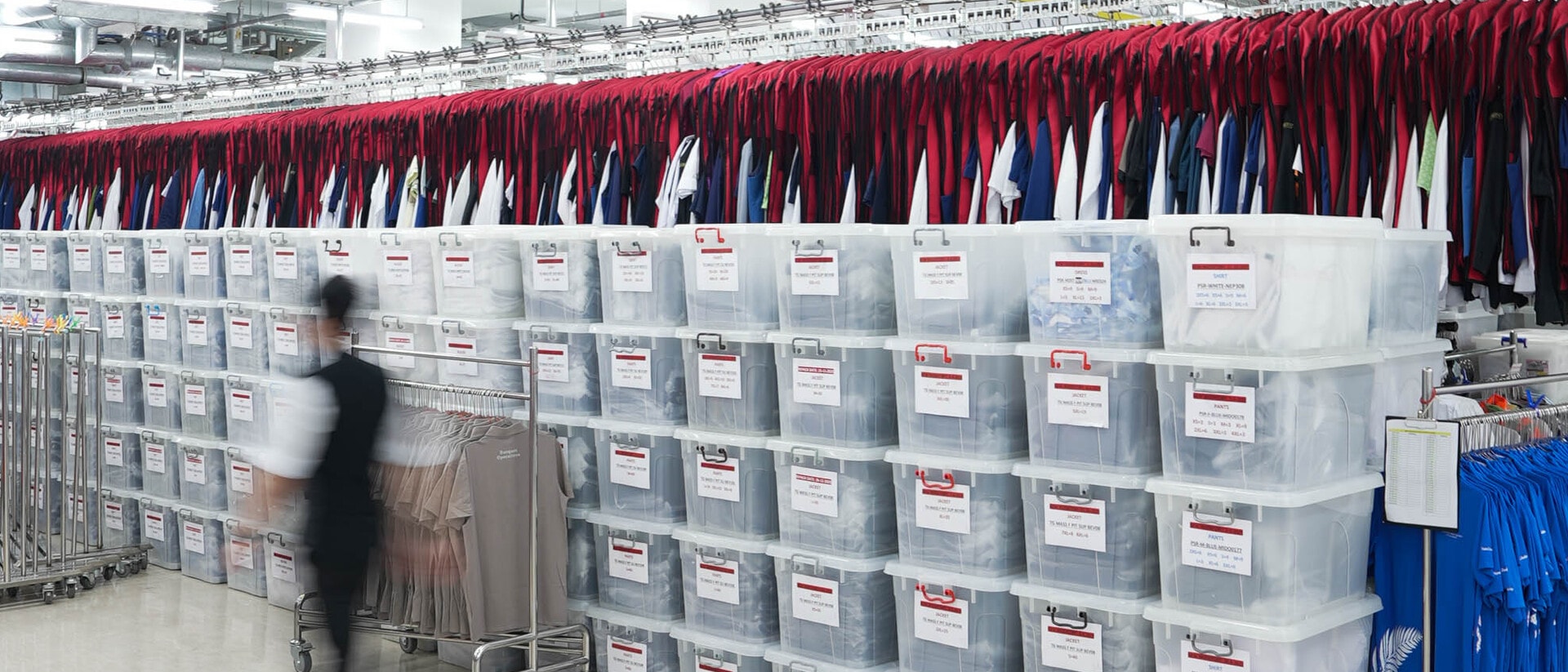
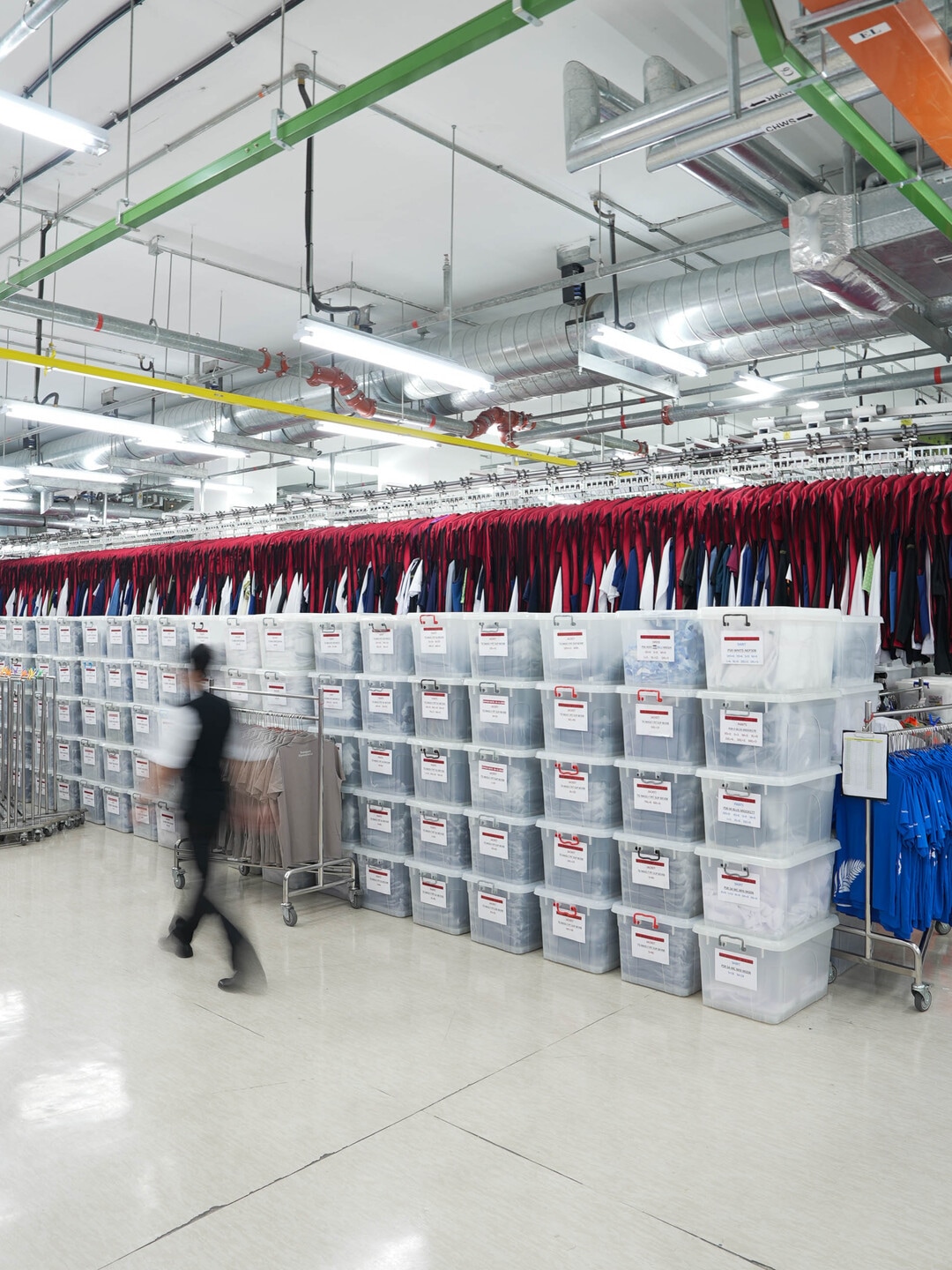
For an integrated resort with more than 12,000 staff, washing and keeping track of approximately 200,000 pieces of uniforms that many of them put on every day has been a challenge that required a unique solution.
At Marina Bay Sands, each uniform comes with an “invisible” chip neatly sewn in, for example at the base of a shirt or blouse, to help personalise and identify it when a Team Member sends it in for cleaning or when it is picked up afterwards through an automatic conveyer.
This is possible with the use of RFID technology, which stores data in these high-frequency chips.
For years, this system involving no fewer than 18 conveyors at the resort’s heart of house has worked 24/7 to track each uniform’s location and the number of washes it has undergone, enabling both accuracy and accountability.
Recently, in an industry-first in Singapore, this wardrobe system was upgraded with ultra-high-frequency chips that enable even better tracking.
By pushing in a trolley of uniforms into a unique fitting room-sized container called the “U-Door”, the wardrobe team at Marina Bay Sands can now count up to 400 uniforms in just 30 seconds.
Dubbed the “black box” by staff, the U-Door senses the new button-sized chips effortlessly. Next to it, a computer captures the list of uniforms ready to be sent to a third-party vendor for cleaning. Each unique uniform is tracked instantly after the bundle of clothing is scanned.
This enables the integrated resort to estimate the cleaning cost expected from a third-party vendor. Previously, each garment had to be scanned individually, consuming valuable time.
“By analysing the data and trends from each batch of clothing sent for cleaning, Marina Bay Sands can also better understand its requirements and predict costs,” says Daing Syawal, Executive Director of Housekeeping. Staff freed from the repetitive task of counting can also focus on higher-value responsibilities such as overseeing the delivery and cleaning of the uniforms, he adds.
One reason for the upgrade is the sheer volume of garments that Marina Bay Sands deals with. “Technology enables us to overcome manpower issues by multiplying the capabilities of the team we have,” says Syawal.
Insights into the future
The new chips are gradually being incorporated into uniforms worn across departments in Marina Bay Sands, as it ramps up the new system first rolled out in 2024.
Part of the challenge is ensuring that both new and old chips work well together. This means separately accounting for garments tagged differently until all are equipped with the new chip.
Why go through all this trouble in the first place, for uniforms that many organisations simply discard or replace when worn out? At Marina Bay Sands, the idea goes beyond productivity gains.
For one, the chips enable the company to understand how many times a uniform is worn before it needs to be replaced. While the wardrobe team is not in charge of designing the uniforms, the data it collects allows it to provide valuable feedback on the durability of materials.
Just as importantly, the unique tracking promotes ownership among Team Members, from frontline receptionists to culinarians and facilities staff, by encouraging more mindful care of the uniform issued to them.
Culture of continuous innovation
The chip upgrade also reflects the continuous innovation that occurs across the company. While the earlier system already works fine, it is always on the lookout for new ideas and breakthroughs that make a difference.
“When we do this, we need to do our homework because we need to present a proposal to the leadership team,” says Syawal. “There’s a huge investment, but the company is always supportive when you present an idea to improve.”
Besides the chip upgrade, the housekeeping team has also started using autonomous mobile robots (AMRs) at the heart-of-house to deliver accessories and amenities to staff taking care of the hotel rooms.
Already, the robots have been deployed to carry loads for other departments, such as fresh produce for the integrated resort’s restaurants, but they will soon help restock items in hotel rooms as well.
Instead of deploying people to manually deliver the items, the robots travel around the heart-of-house areas to assist staff. Running during off-peak hours to avoid the human traffic, they will be valuable robotic assistants.
Yet another improvement is a unique laundry chute system that emphasises safety. Most hotels have common chutes for housekeepers to drop used towels and bedlinen from high-rise floors, and Marina Bay Sands has gone further to ensure that only one chute opens at a time.
If a member of the housekeeping staff opens a chute on the 40th floor, a sensor informs a central system to lock down the other floors. This way, other staff will not be able to open the chute at the same time and be accidentally hurt by the falling items.
Technology is a big part of operations because it makes them more automated and safer for human operators, says Syawal of the continual need to improve.
“So, my boss will ask me what's new in the market, and if there’s anything that we can upgrade within our processes,” he notes. “So far, we have never got rejected on any ideas that we have.”